
BOT X / Journal
Where Do Robot Dogs Make the Most Sense? Key Industries and Applications
November 5, 2026Explore how robot dogs are transforming industries through autonomous inspection, surveillance, monitoring and operations in challenging environments.
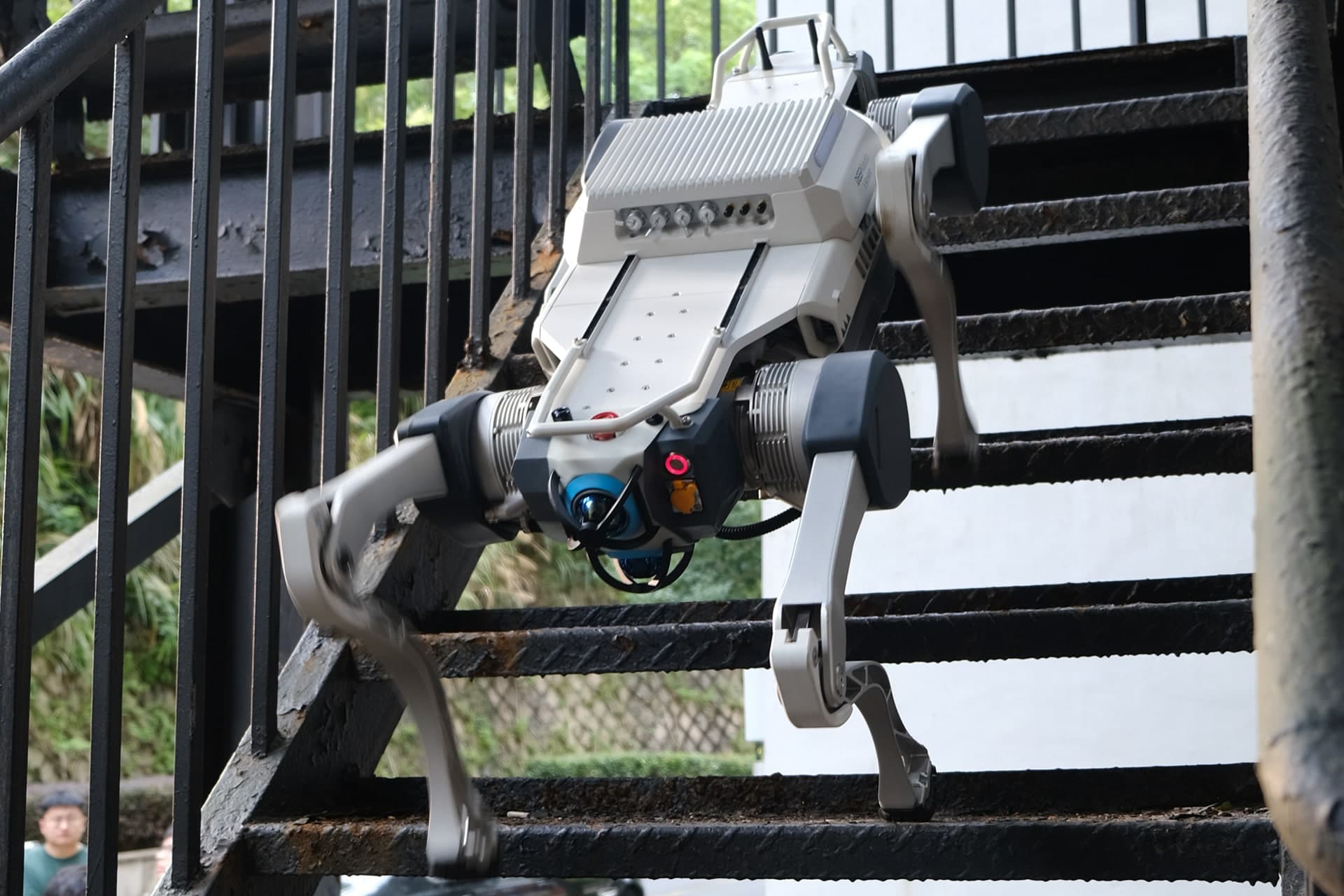
Robot dogs, also known as quadruped robots, are moving beyond research laboratories and entering real-world industrial applications. Equipped with cameras, LiDAR, thermal sensors and AI-powered inspection systems, these four-legged robots can navigate challenging environments and perform tasks that may be difficult or risky for humans.
But which industries can benefit the most from them?
Here are nine promising applications.
1. Oil & Gas
Robot dogs can inspect pipelines, storage tanks and refinery facilities, monitor equipment temperatures and detect hazardous gas leaks. They can help reduce human exposure to dangerous environments.
2. Power & Utilities
In power plants and electrical substations, quadruped robots can perform routine inspection rounds, identify overheating components and read equipment gauges using cameras and thermal sensors.
3. Mining & Metals
Underground mines and industrial mining sites often have difficult terrain and hazardous conditions. Robot dogs can assist with tunnel mapping, equipment inspection and environmental monitoring.
4. Construction & Infrastructure
Construction companies can use robot dogs for site monitoring, 3D mapping, progress tracking and digital twin creation. Their ability to navigate uneven surfaces makes them useful on complex sites.
5. Security & Defence
Equipped with thermal cameras and autonomous navigation, robot dogs can support perimeter surveillance, remote reconnaissance and security patrols across large facilities.
6. Pharmaceuticals & Chemical Manufacturing
Robot dogs can monitor restricted-access areas, inspect industrial equipment and identify abnormal temperatures or potential environmental hazards.
7. Data Centres
With growing data-centre infrastructure, quadruped robots offer opportunities for automated thermal inspections, cooling-system monitoring and security patrols.
8. Railways, Ports & Airports
Large infrastructure facilities can use robot dogs for inspection, surveillance and monitoring of hard-to-reach areas, including tunnels, terminals and maintenance zones.
9. Agriculture & Plantations
In large plantations and commercial farms, robot dogs can support terrain mapping, crop monitoring, environmental data collection and livestock surveillance.
Where Do Robot Dogs Offer the Greatest Value?
Robot dogs are not necessarily the best solution for every application. In conventional warehouses and structured manufacturing facilities, wheeled mobile robots or AGVs may offer better economics.
Their real advantage lies in environments where stairs, uneven terrain, obstacles and hazardous conditions make conventional mobile robots less practical.
The commercial opportunity is also evolving beyond hardware. Combining quadruped robots with thermal imaging, gas detection, AI vision and autonomous inspection software can turn them into specialised industrial solutions.
The Future of Quadruped Robots
As robotics, artificial intelligence and autonomous navigation continue to advance, robot dogs are likely to become increasingly useful across industrial and infrastructure sectors.
For businesses, the question is no longer simply whether a robot dog can walk. It is whether it can perform a valuable task more safely, efficiently and economically than existing methods.
Explore the world of quadruped robots, robotics solutions and automation technologies at BOT X.